Raccoon Removal in Detroit
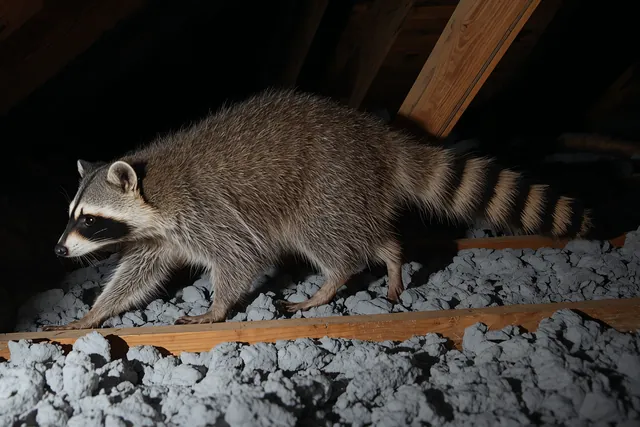
Raccoon removal in Detroit usually starts with something heavy moving over a bedroom ceiling after dark.
This line takes calls about raccoons in the attic, walls or chimney, from trapping and removal to sealing the way in, and connects you with an independent wildlife control operator.
Call about a raccoon(313) 370-4445
For animals inside a private home or building. A bite to a person or a pet goes to the city first; see below.
What is happening at your house?
Raccoon in the Attic in Detroit
A raccoon in the attic of a Detroit house: how to tell it is a raccoon, why spring usually means a litter, and what removal and sealing involve.
In the atticSquirrel Removal in Detroit
Squirrel removal in Detroit when squirrels are nesting in the attic or walls: which squirrel it is, when litters arrive, and what keeps them out.
SquirrelsWildlife Removal for Detroit Homes
Wildlife removal for Detroit homes with a live wild animal in the attic, walls or chimney: what this line takes, what it does not, and who to call instead.
Other wildlifeNoises in the Attic: Raccoon or Squirrel?
Scratching or thumping in the attic of a Detroit house: how the hour, the weight of the sound and the season point to a raccoon or a squirrel.
Attic noisesRaccoon Droppings and Latrines
Raccoon droppings in an attic or on a roof: how to recognize a latrine, what the CDC says about raccoon roundworm, and how cleanup is done.
DroppingsAnimal Control and Raccoons in Detroit
Raccoons and animal control around Detroit: what Oakland and Wayne County offices say they handle, their numbers, and who to call for a raccoon indoors.
City or private?
How it works
Four things to say
The call goes better when you can say four things: where in the house the sound is, what hour it starts, whether anyone has seen the animal, and whether you have found a hole, a torn soffit or a loose roof vent.
The operator decides
Price, timing and method belong to the operator who takes the job and are settled on that call. This site sets none of them.
Write it down instead
Prefer to write? The contact page has the same form with more room.
Raccoon or squirrel? Start with the clock
You rarely see the animal, so the hour of the noise is the best first clue.
| Animal | When it moves | What the sources say |
|---|---|---|
| Raccoon | Night | Northern raccoons are typically nocturnal.1 |
| Gray squirrel | Day | Less shy than most animals about being out in daylight.2 |
| Red squirrel | Day, all year | Diurnal and active year-round.3 |
| Flying squirrel | Night | Nocturnal, which is why people seldom see them.4 |
Noise at 2 a.m. points one way; noise at breakfast points another.
The attic noise guide goes through the rest, and squirrel removal has its own page.
For anything else living in the structure, see other wildlife.
What the city does, and where it stops
If a raccoon has bitten someone, get medical care, then phone the city's bite line, (313) 922-DOGS (3647).5
The city or private page lays out who does what, including the suburbs.
Questions people ask first
Is it one raccoon or a family?
From late winter into summer, assume a litter until someone has looked.
Raccoons mate between January and March, a female usually has one litter a year, and average litters run from two to five kits.
Who comes to the house?
An independent wildlife control operator, if one works at your address.
This line passes your call or request on and does no trapping or repair work itself.
Does this line handle bats?
No. This line is for raccoons, squirrels and other wild animals living in the structure of a house.
Bats follow different rules and health guidance.
Sources
Sources
- USDA Forest Service (Fire Effects Information System). Procyon lotor (Tesky, J.L. 1995), Fire Effects Information System species review.
- NPS (Big Thicket National Preserve). Eastern Gray Squirrel.
- USDA Forest Service (Fire Effects Information System). Tamiasciurus hudsonicus (Sullivan, J. 1995), Fire Effects Information System species review.
- NPS (National Capital Region Inventory & Monitoring Network). Flying Squirrels: A Field Note.
- Detroit Animal Care and Control. Animal Control (collapsed FAQ answers).
Raccoon or squirrel in the attic, walls or chimney?
Call the line (313) 370-4445